Plant
Lime
Citrus aurantiifolia / Citrus latifolia
Also known as: Citrus aurantiifolia, key lime, Citrus latifolia, Persian lime
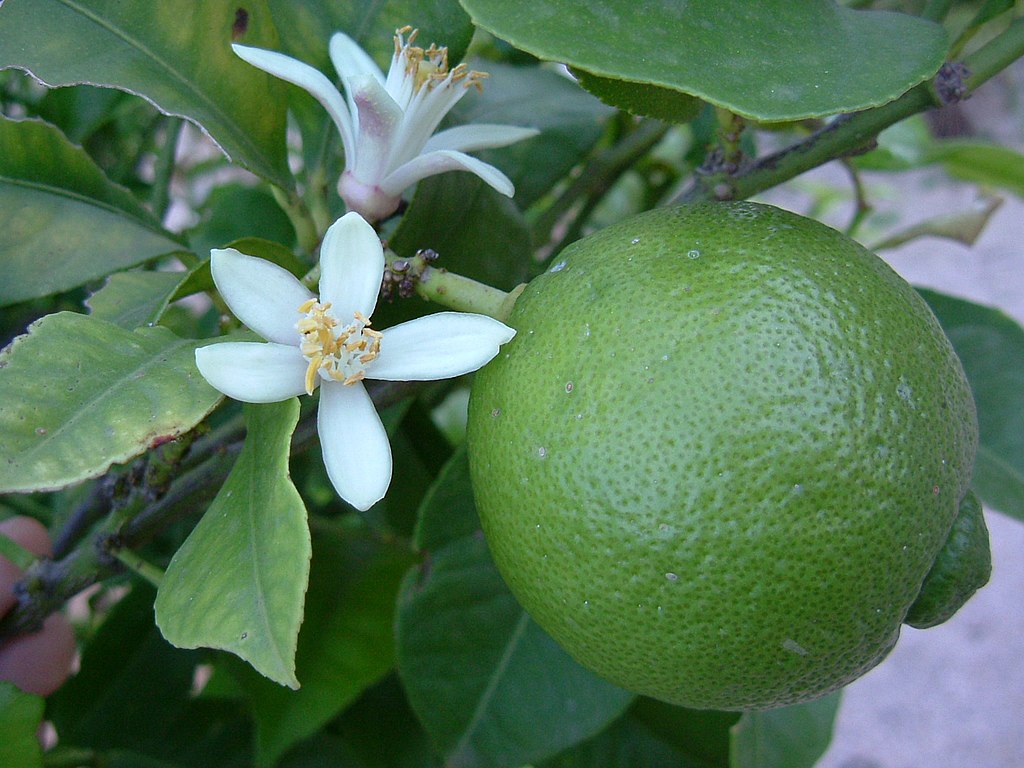
A small evergreen citrus tree producing the small green acid fruit — actually several distinct species and hybrids sharing the common name. The Persian lime (*Citrus latifolia*) is the seedless commercial lime of supermarket trade; the Key lime (*Citrus × aurantiifolia*) is smaller, more aromatic, and the original lime of pre-20th-century cuisine. Limes are foundational to Latin American (Mexican carnitas, ceviche, salsa), Southeast Asian (Thai, Vietnamese, Burmese), South Asian (lime pickle, *neembu pani*), and Persian Gulf cuisines.
Scientific
“Lime” refers to several distinct citrus species and hybrids:
- Citrus × aurantiifolia — Key lime / Mexican lime; small, seeded, intensely aromatic; the original lime of pre-20th-century cuisine
- Citrus latifolia — Persian / Tahiti lime; larger, seedless, less aromatic; dominant commercial form
- Citrus × hystrix — kaffir / makrut lime; bumpy-skinned; the leaves and zest are used in Southeast Asian cooking (the juice is rarely used)
- Citrus aurantiifolia finger limes (C. australasica) — Australian native; caviar-like internal vesicles
All are hybrids of original Citrus parent species — citron, pomelo, papeda, mandarin — combined in different ratios.
Cultural
Limes are native to Southeast Asia (Indonesia/Malaysia/Vietnam region). They reached the Mediterranean via Arab agriculture during the medieval period (similar route to lemon). Spanish and Portuguese colonization carried limes to Latin America, where Key lime became culturally embedded.
The lime’s role in British naval history is the source of the “limey” nickname for British sailors — Royal Navy ships carried lime juice as the standard anti-scurvy ration starting in the 1790s. The choice was partly economic (Caribbean colonial lime production was cheaper than Mediterranean lemon imports), partly availability — though it turned out limes have less vitamin C than lemons and the practice did contribute to some scurvy outbreaks despite the official compliance.
Mexican cuisine without lime is unrecognizable; Thai, Vietnamese, and Burmese cooking equally so. The Persian Gulf has a unique preparation — limoo amani / black dried lime, used whole in stews and rice dishes for a fermented sour-bitter flavor that resembles nothing in Western cuisine.
Global production
Top producers: India, Mexico, China, Argentina, Brazil. Indian and Mexican production includes large smallholder agricultural sectors.
See also
Auto-generated from this entry’s typed relations: frontmatter, grouped by relation type so the editorial signal isn’t flattened.
Sources
- Wikipedia — Lime (fruit)
A plant entry in the 0mn1.one directory.
What links here, and how
Inbound connections from across the wiki, grouped by lens and by relationship. These appear automatically — every entity page declares what it links to, and that data populates here on the targets.
Scientific
cousin of
- Buddha's hand auto-linked from body mention
- Calamansi auto-linked from body mention
- Kaffir lime Both *Citrus* — but kaffir lime is from the older papeda lineage rather than the cultivated lime's mandarin/citron hybrid origin; the shared 'lime' name is more cultural than botanical.
- Kumquat auto-linked via shared tag: citrus
- Lemon Citrus kin — lemon and lime fill the same culinary niche (the principal sour citrus) in different cuisines; Mediterranean traditions reach for lemon, Latin American and Southeast Asian for lime.
- Orange auto-linked via shared tag: citrus
- Pomelo auto-linked from body mention
- Yuzu auto-linked from body mention
shares approach with
- Grapefruit fellow Citrus hybrid in the same Rutaceae lineage
Cultural
shares approach with
- Cilantro / coriander Cilantro-and-lime is the universal Mexican, Thai, and Vietnamese flavor signature; the acid-and-herb pairing is structural to those cuisines.
counterpart to
- Lemon The two principal sour-citrus species in cuisine — lemon for European, Levantine, and North African cooking; lime for Mexican, Caribbean, Indian, and Southeast Asian. The pair represent parallel cultural answers to the same culinary need.
General
shares approach with
- Starfruit auto-linked via shared tag: southeast-asia
12 inbound links · 2 outbound