Plant
Rye
Secale cereale
Also known as: Secale cereale
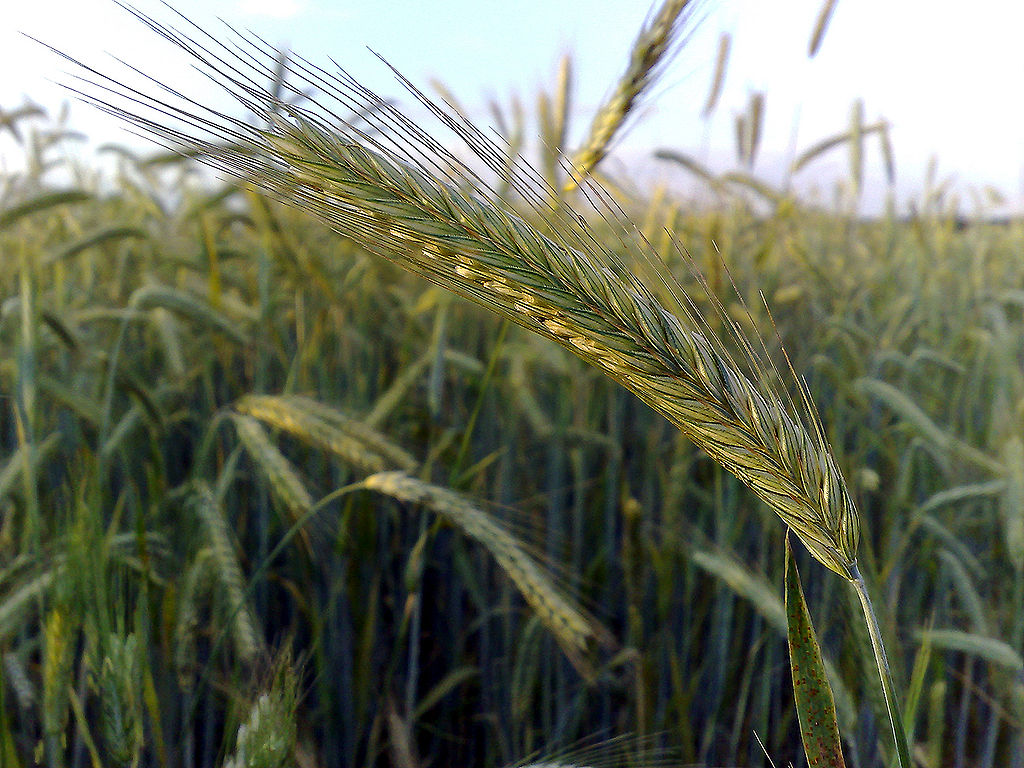
An annual cereal grass — the hardiest of the major small grains, tolerant of cold, drought, acidic soils, and short growing seasons that defeat both wheat and barley. The historical staple grain of central and eastern Europe, Scandinavia, and Russia. The foundation of dark German breads, Russian black bread, Polish *żurek*, and Finnish *ruisleipä*. Less globally significant by volume than the other cereals, but central to the cuisines of regions whose climates demand its cold-tolerance.
Scientific
Secale cereale is closely related to wheat and barley but with a distinctive constellation of cold-and-stress tolerances. The species overwintered in central European fields successfully where winter wheat failed, which is why rye became the dominant grain across the cold-belt north and east.
Rye flour contains less gluten than wheat and more soluble fiber and pentosans, which is why rye breads are denser, moister, and slower to stale — the chemistry behind German pumpernickel and Russian black bread.
Cultural
The “rye belt” — Poland, Belarus, Russia, eastern Germany, the Baltics, Scandinavia — has rye-bread cultures going back to the early medieval period. Russian black bread, often sourdough-fermented for days, was the calorie foundation of peasant diets for centuries. The Finnish ruisleipä (rye loaf with a hole in the middle, traditionally hung from rafters to dry-cure) was made in spring and eaten through the winter.
Ergot poisoning — caused by Claviceps purpurea fungus growing on damp rye — was a recurring medieval European catastrophe. “St Anthony’s fire” outbreaks, the suspected basis for several witch-hunt episodes, traced to ergot-contaminated rye flour.
Global production
Top producers: Germany, Poland, Russia, Belarus, Denmark.
See also
Auto-generated from this entry’s typed relations: frontmatter, grouped by relation type so the editorial signal isn’t flattened.
Sources
- FAO Crop Statistics
- Wikipedia — Rye
A plant entry in the 0mn1.one directory.
What links here, and how
Inbound connections from across the wiki, grouped by lens and by relationship. These appear automatically — every entity page declares what it links to, and that data populates here on the targets.
Scientific
shares approach with
- Triticale the rye parent contributes cold-hardiness, low-fertility tolerance, and disease resistance
cousin of
- Wheat Poaceae kin — rye is the cold-tolerant European cereal that filled the agricultural niche where wheat couldn't, foundational to Northern and Eastern European bread traditions.
8 inbound links · 7 outbound