Plant
Spelt
Triticum spelta
Also known as: Triticum spelta, dinkel wheat
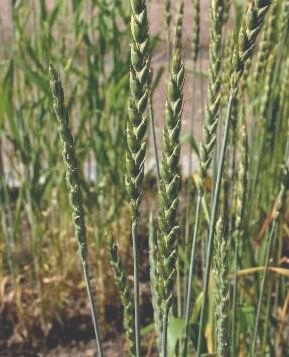
A hexaploid wheat species closely related to common bread [[wheat]] (*Triticum aestivum*) but distinguished by tougher hulls that adhere tightly to the grain and require additional processing. Spelt is one of the older domesticated wheats — cultivated across Bronze Age Europe and parts of Asia for thousands of years before being largely displaced by the higher-yielding modern bread wheat in the 20th century. Modern interest in 'ancient grains' has restored some commercial production, particularly in Germany (*Dinkel*) and Switzerland.
Scientific
Triticum spelta is a hexaploid wheat species — like modern bread wheat (Triticum aestivum), it carries three complete genomes from three different ancestral grass species combined through ancient natural hybridization. The exact phylogenetic relationship between spelt and bread wheat is debated; spelt may be an ancient ancestor, a sister species, or a hybridized form depending on the lineage examined.
The principal difference from modern bread wheat is the hulled character — spelt grains are encased in tough chaff that remains tightly attached to the grain after threshing. This requires an additional dehulling step (running grain through a mill that specifically separates the hull) before further processing. The hull’s persistence is what made spelt less attractive for industrial milling and contributed to the species’ 20th-century decline.
Cultural and historical
Spelt was widely cultivated across Bronze Age and Iron Age Europe, particularly in southern Germany, Switzerland, and the Balkans. The species was a major staple of medieval German agriculture (German Dinkel) and remained in regular cultivation through the 19th century.
The 20th-century shift to higher-yielding modern bread wheat reduced spelt to marginal cultivation by ~1950. From the 1980s onward, “ancient grain” interest has restored commercial production — primarily in:
- Germany (Dinkelbrot, Dinkelmehl; the species is foundational to several German regional bread traditions)
- Switzerland (similar role to Germany)
- Italy (farro; though farro in Italian sometimes refers to emmer rather than spelt — the naming is regionally inconsistent)
- USA and UK — small but growing artisanal-bakery and health-food markets
Some people who experience digestive issues with modern bread wheat report tolerating spelt better — though spelt does contain gluten and is not safe for people with celiac disease.
See also
Auto-generated from this entry’s typed relations: frontmatter, grouped by relation type so the editorial signal isn’t flattened.
- Shares approach with: rye · oats · teff · sweet-woodruff · st-johns-wort
- Member of: plants
- Cousin of: wheat
Sources
- Wikipedia — Spelt
A plant entry in the 0mn1.one directory.
What links here, and how
Inbound connections from across the wiki, grouped by lens and by relationship. These appear automatically — every entity page declares what it links to, and that data populates here on the targets.
Scientific
cousin of
- Wheat *Triticum* kin — spelt (*T. spelta*) is one of the ancestral hulled wheats from which modern bread wheat (*T. aestivum*) descends; spelt is increasingly grown again as a heritage grain.
General
shares approach with
- St. John's wort auto-linked via shared tag: europe
2 inbound links · 7 outbound