Plant
Lingonberry
Vaccinium vitis-idaea
Also known as: Vaccinium vitis-idaea, cowberry, partridgeberry
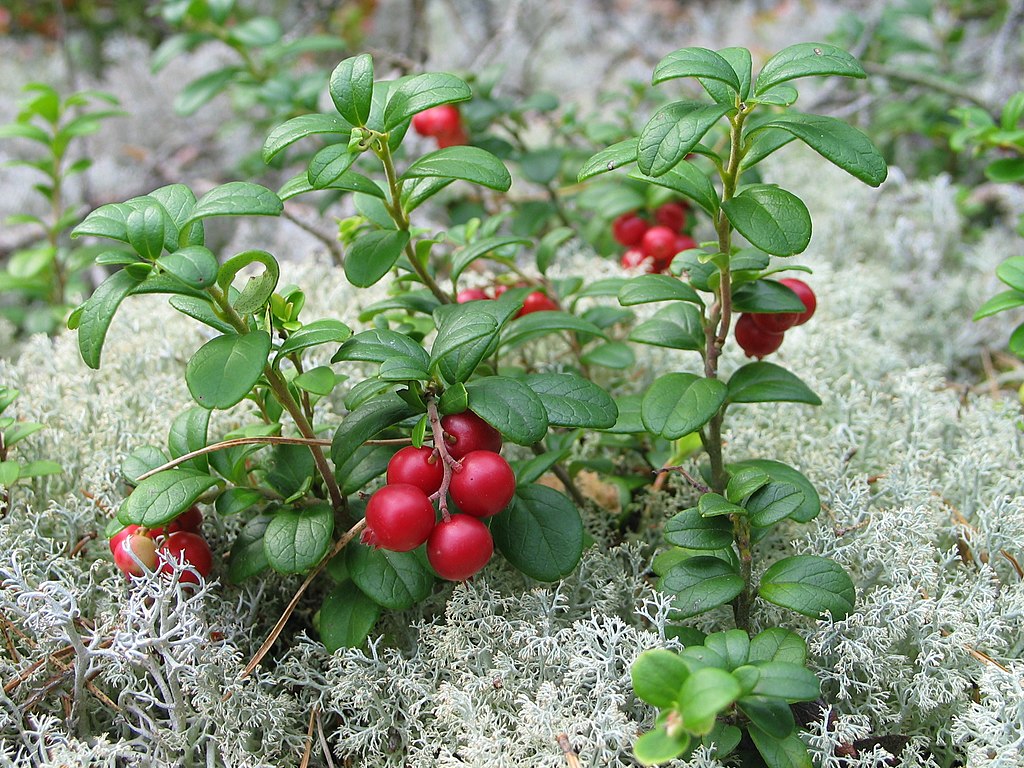
A small evergreen low-growing shrub in the heath family (Ericaceae) — circumpolar across the Arctic and subarctic Northern Hemisphere. Closely related to [[blueberry]] and cranberry (same genus). The small red berries are tart and tannic, foundational to Scandinavian cuisine across the entire region — lingonberry jam alongside meatballs (Swedish *köttbullar med lingonsylt*) is one of the most-recognized national dish pairings in any culture. Also major in Russian, Baltic, Finnish, and Canadian boreal foraging traditions. The species' commercial visibility increased dramatically in Western countries through IKEA's restaurant menu, which serves Swedish meatballs with lingonberry jam to millions of customers annually.
Scientific
Vaccinium vitis-idaea (family Ericaceae) is in the same genus as blueberry (V. corymbosum) and cranberry (V. macrocarpon). The plant is a low-growing evergreen shrub forming dense ground-covering mats in boreal forest understory, alpine tundra, and peatland edges across the circumpolar Northern Hemisphere.
The berries are small (~6–10 mm), bright red, tart and tannic. The flavor is distinct from blueberry — much more astringent and acidic, more similar to cranberry but smaller and slightly sweeter when fully ripe.
The species’ Latin name vitis-idaea means “vine of Mount Ida” — Mount Ida being the Greek mountain associated with Zeus’s nurture; the name traces from a Theophrastean misidentification of an Aegean plant. The wild range never actually extended into the Mount Ida area.
Cultural and culinary
The Swedish köttbullar med lingonsylt (meatballs with lingonberry jam) is one of the most-recognized cultural pairings in Western cuisine — partly because IKEA’s restaurants serve it to over 600 million customers per year globally, making lingonberry a more globally-recognized berry than its Scandinavian cultural footprint would otherwise warrant.
Standard cultural uses across the Nordic and adjacent regions:
- Sweden — meatball pairing; lingon in many other contexts; one of the few wild-foraged fruits broadly commercial
- Finland — puolukka in puolukkapuuro (lingonberry porridge), puolukkahillo (lingonberry jam); foundational to many Finnish meals
- Norway — tyttebær in jams and traditional preparations
- Russia — brusnika in jams, juices, traditional Russian beverages
- Baltic states — Estonian pohl, Latvian brūklene; foundational regional fruits
- Northern Canada (Newfoundland, Quebec) — partridgeberry in jams, pies, and partridgeberry crumble
- Sami cuisine — traditional Sami food across northern Scandinavia
The species’ commercial visibility in Western markets has grown dramatically since the 1990s — driven by IKEA’s global restaurant presence, by Nordic-cuisine restaurant trend, and by the broader Anglo-American interest in superfood berries.
Wild harvest
Across the Nordic region and northern Russia, lingonberry foraging is one of the major fall harvest activities. The Swedish allemansrätten (right of public access) explicitly protects the right to gather wild berries on private land. Annual Finnish wild harvest is estimated at 30,000–40,000 tonnes; Swedish and Russian harvests are similar or larger.
See also
Auto-generated from this entry’s typed relations: frontmatter, grouped by relation type so the editorial signal isn’t flattened.
- Member of: plants · nordic-wild-berries
- Cousin of: blueberry
Sources
- Wikipedia — Lingonberry
A plant entry in the 0mn1.one directory.
What links here, and how
Inbound connections from across the wiki, grouped by lens and by relationship. These appear automatically — every entity page declares what it links to, and that data populates here on the targets.
Scientific
cousin of
- Blueberry auto-linked via shared tag: ericaceae
Cultural
shares approach with
- Cloudberry Nordic / Arctic foraging-kin — lingonberry and cloudberry are the two foundational wild berries of Scandinavian and Sami foraging tradition.
2 inbound links · 3 outbound