Plant
Peyote
Lophophora williamsii
Also known as: Lophophora williamsii
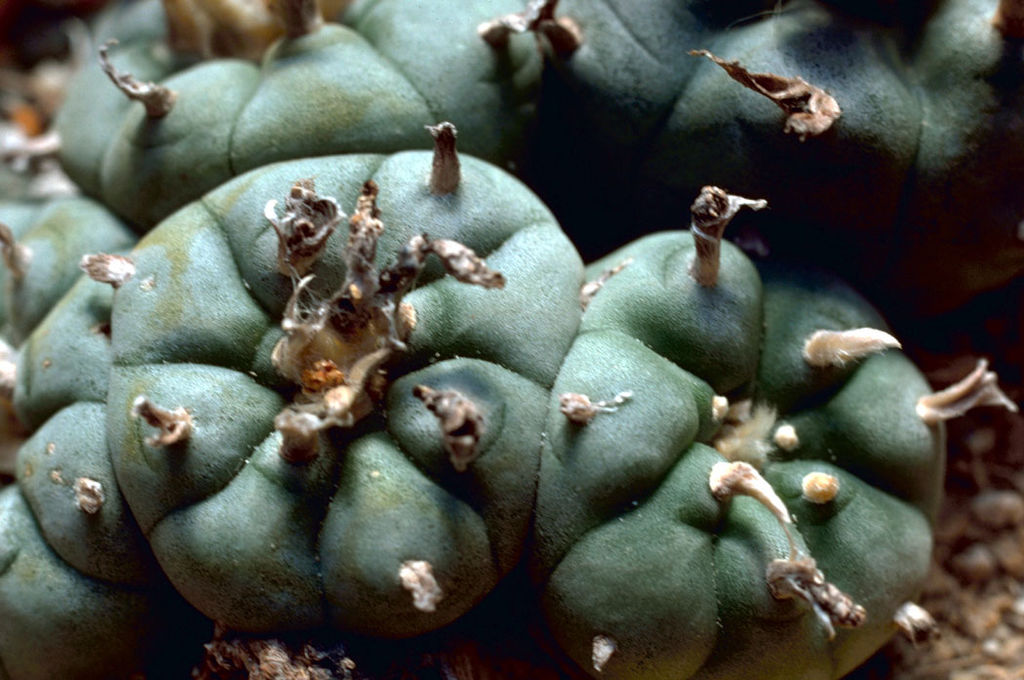
A small spineless cactus native to the Chihuahuan Desert of northern Mexico and the lower Rio Grande valley of Texas. The plant contains mescaline and related psychoactive alkaloids; ceremonial use by Indigenous peoples in northern Mexico and the southern US goes back at least 5,500 years (the oldest documented use of any psychoactive plant in the Americas). The Native American Church — incorporated in 1918 and the principal modern peyote-using religious organization — holds federal religious-exemption rights to use the plant in ceremony. The species is now threatened in the wild due to over-harvesting and habitat loss; conservation and sustainable-harvest agreements with the Native American Church are an active area of policy work.
Scientific
Lophophora williamsii (family Cactaceae) is a small spineless button-shaped cactus that grows in a narrow geographic range — the southern Chihuahuan Desert of Coahuila, Nuevo León, San Luis Potosí, Tamaulipas, and Zacatecas in Mexico, extending into the lower Rio Grande valley of Texas. The plant is exceptionally slow-growing — wild peyote takes 10–30 years to reach commercial harvestable size.
The species contains mescaline (the principal psychoactive alkaloid) and ~50 related phenethylamine and isoquinoline alkaloids. Mescaline was the second major psychedelic compound isolated and characterized by Western chemistry (1897, by Arthur Heffter; the first was tobacco‘s nicotine). The compound is structurally simpler than the indole-tryptamines of psilocybin and LSD but produces broadly comparable psychoactive effects.
Indigenous ceremonial use
Peyote use by Indigenous peoples of northern Mexico and the southwestern US is documented archaeologically back at least 5,500 years — the oldest direct evidence of any psychoactive plant use in the Americas, predating Indigenous use of cacao, tobacco, and most other ceremonial plants on the continent.
The Huichol (Wixárika) people of northern Mexico maintain perhaps the longest continuous peyote-religion tradition. The annual Huichol peyote pilgrimage to Wirikuta — a sacred desert site in San Luis Potosí — is one of the most-documented Indigenous religious pilgrimages in the Western Hemisphere.
The Native American Church — established in 1918 as a formal religious organization to legally protect the peyote-use practices that had spread north among Plains Indigenous peoples in the late 19th and early 20th centuries — holds federal religious-use exemption under the American Indian Religious Freedom Act Amendments of 1994. The NAC’s peyote ceremonies are conducted in tipi or ceremonial-hogan settings overnight; the practice has spread across many Indigenous nations including the Navajo, the Lakota, and dozens of others.
Conservation crisis
The species is now classified as Vulnerable on the IUCN Red List. Wild peyote populations have declined dramatically due to:
- Over-harvesting (both for the Native American Church and for the broader 21st-century psychedelic-tourism market)
- Habitat loss in the Chihuahuan Desert
- The species’ exceptional slow growth (a harvested plant cannot be replaced for decades)
Sustainable-harvest agreements between the Native American Church, Mexican and US conservation authorities, and traditional Huichol peyote-gathering communities are an active focus of contemporary policy work. Cultivation in greenhouses is technically possible but cannot meet ceremonial demand.
See also
Auto-generated from this entry’s typed relations: frontmatter, grouped by relation type so the editorial signal isn’t flattened.
Sources
- Wikipedia — Peyote
- Edward Anderson, Peyote: The Divine Cactus (1996)
A plant entry in the 0mn1.one directory.
What links here, and how
Inbound connections from across the wiki, grouped by lens and by relationship. These appear automatically — every entity page declares what it links to, and that data populates here on the targets.
Scientific
cousin of
- Saguaro Cactaceae and Indigenous-sacred kin — saguaro centers Tohono O'odham religious calendar, peyote centers Wixárika/Huichol and NAC ceremonial life.
General
shares approach with
- Dragon fruit auto-linked via shared tag: cactaceae
- Plumeria auto-linked via shared tag: mexico
- Sandalwood auto-linked via shared tag: sacred-plant
4 inbound links · 3 outbound