Plant
Peony
Paeonia (genus)
Also known as: Paeonia
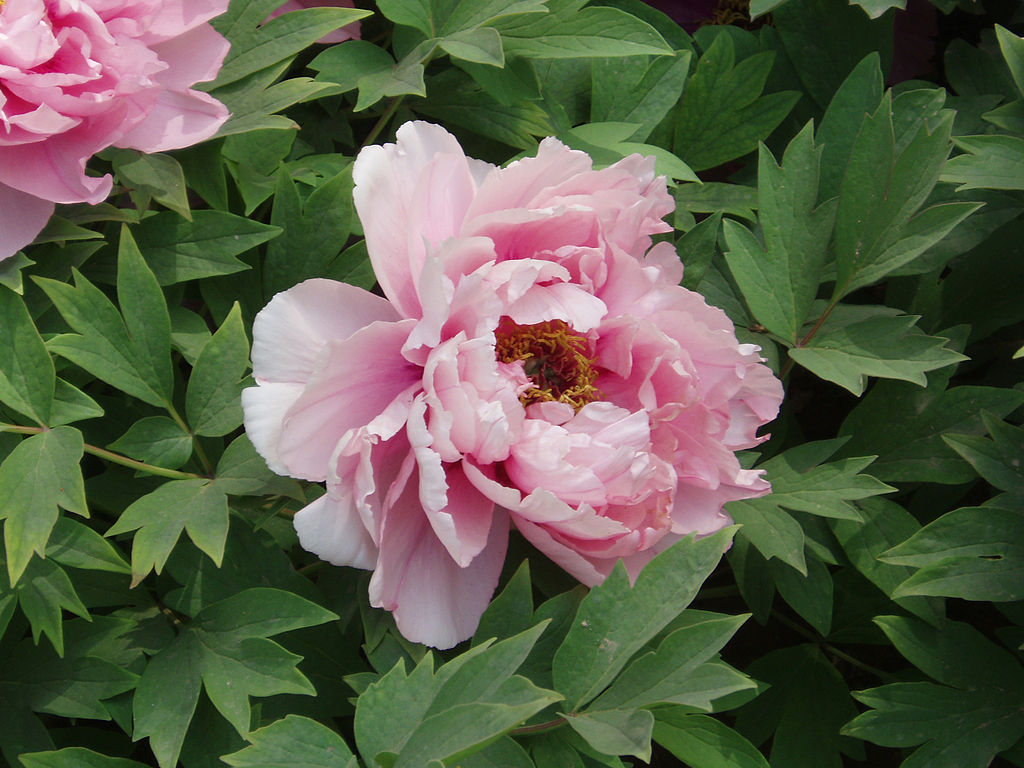
A genus of around 30 species of long-lived perennial flowering plants in the family Paeoniaceae — native across temperate Eurasia and western North America. The tree peony (*Paeonia × suffruticosa*) is one of the most-cultivated ornamentals in Chinese horticultural history, with over 1,500 years of breeding tradition. The flower is called the 'king of flowers' (*huāwáng*) in Chinese tradition and was a near-national flower of China before the early-20th-century proposals. Peony cultivation traveled with Chinese diplomacy to Japan and Korea, then with 19th-century plant collectors to Europe and America.
Scientific
Paeonia contains ~30 species, split between two principal forms:
- Herbaceous peonies — die back to the ground each winter; Paeonia lactiflora and P. officinalis are the principal garden species
- Tree (woody) peonies — woody stems that persist year to year; Paeonia × suffruticosa is the Chinese tree peony group; the rare wild P. rockii and P. ostii are ancestors
A third intersectional category — Itoh peonies — are 20th-century hybrids of herbaceous × tree peonies, named for the Japanese breeder Toichi Itoh.
Cultural
The tree peony is one of the most heavily cultivated ornamentals in Chinese horticultural history. Documented breeding goes back to the Sui and Tang dynasties (6th–10th c. CE), with major cultivar development continuing through the Song, Ming, and Qing dynasties. The Tang city of Luoyang became (and remains) the center of Chinese peony cultivation — the Luoyang peony festival each April draws hundreds of thousands of visitors.
The peony is called the “king of flowers” in Chinese poetic tradition and represents wealth, prosperity, and beauty. It was a serious candidate for the official national flower of China during 20th-century debates (the plum blossom and peony being the two principal contenders; neither has been officially designated).
The flower carried through Chinese diplomatic gift exchanges to Japan (where it appears in samurai kamon family crests and traditional poetry), to Korea, and from there in the late 19th and early 20th century into European and American gardens via the work of plant collectors and breeders.
See also
Auto-generated from this entry’s typed relations: frontmatter, grouped by relation type so the editorial signal isn’t flattened.
- Shares approach with: chrysanthemum · yangmei · shiso · shiitake · gardenia · enoki
- Member of: plants
Sources
- Wikipedia — Peony
A plant entry in the 0mn1.one directory.
What links here, and how
Inbound connections from across the wiki, grouped by lens and by relationship. These appear automatically — every entity page declares what it links to, and that data populates here on the targets.
General
shares approach with
- Chrysanthemum auto-linked via shared tag: ancient-cultivar
- Kelp auto-linked via shared tag: japan
- Yangmei auto-linked via shared tag: china
3 inbound links · 7 outbound