Plant
Myrrh
Commiphora myrrha
Also known as: Commiphora myrrha
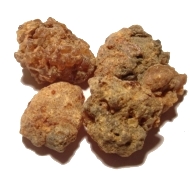
The aromatic gum-resin of *Commiphora* species — small thorny trees in the same family as [[frankincense]] (Burseraceae), native to the Horn of Africa and the southern Arabian Peninsula. One of the most ancient internationally-traded substances; the second of the three Magi gifts (alongside frankincense and gold). Used in Egyptian embalming, in temple incense across Mediterranean antiquity, in traditional Chinese and Ayurvedic medicine, and in modern dental preparations (myrrh is a documented antimicrobial).
Scientific
Myrrh is the dried resin of several Commiphora species in Burseraceae:
- Commiphora myrrha — Yemen, Somalia, Ethiopia; the principal commercial source
- Commiphora gileadensis — the biblical “balm of Gilead”
- Commiphora wightii — India; the source of guggul in Ayurvedic medicine
The trees are stressed (their bark cut) to induce resin production; the resin hardens into reddish-brown “tears” that are then collected, sorted by grade, and shipped.
Cultural and historical
Myrrh has documented use going back at least 4,000 years. Egyptian embalming used myrrh extensively — Tutankhamun’s burial included myrrh as one of the principal aromatic substances. The ancient Egyptian Punt expedition (~1500 BCE under Queen Hatshepsut) was launched in part to secure direct access to the East African myrrh supply.
Religious uses:
- Christianity — second of the three Magi gifts; carries a death-and-burial association (myrrh was used to anoint Jesus’s body for burial)
- Judaism — one of the principal aromatic ingredients of the holy anointing oil of Exodus
- Islam — used in bakhoor preparations
- Ancient Greek and Roman religion — burned as temple incense
Myrrh oil and gum have well-documented antimicrobial properties; modern mouthwashes, tooth powders, and antiseptic preparations sometimes include myrrh as an active ingredient. The substance is also used in some traditional and modern cosmetics.
See also
Auto-generated from this entry’s typed relations: frontmatter, grouped by relation type so the editorial signal isn’t flattened.
- Shares approach with: frankincense · thyme · tea-tree · khat · goldenseal · aloe-vera
- Member of: plants
Sources
- Wikipedia — Myrrh
A plant entry in the 0mn1.one directory.
What links here, and how
Inbound connections from across the wiki, grouped by lens and by relationship. These appear automatically — every entity page declares what it links to, and that data populates here on the targets.
Cultural
shares approach with
- Khat Horn-of-Africa endemic kin — myrrh and khat are both economic pillars of regional agriculture; together with frankincense they define the region's plant-economy iconography.
- Water lily Ancient Egyptian religious-aromatic kin — myrrh in embalming and ritual, blue lotus in solar-rebirth iconography; both members of the pharaonic religious plant repertoire.
General
shares approach with
- Frankincense auto-linked via shared tag: ancient-trade
3 inbound links · 7 outbound