Plant
Kava
Piper methysticum
Also known as: Piper methysticum, 'awa, yaqona
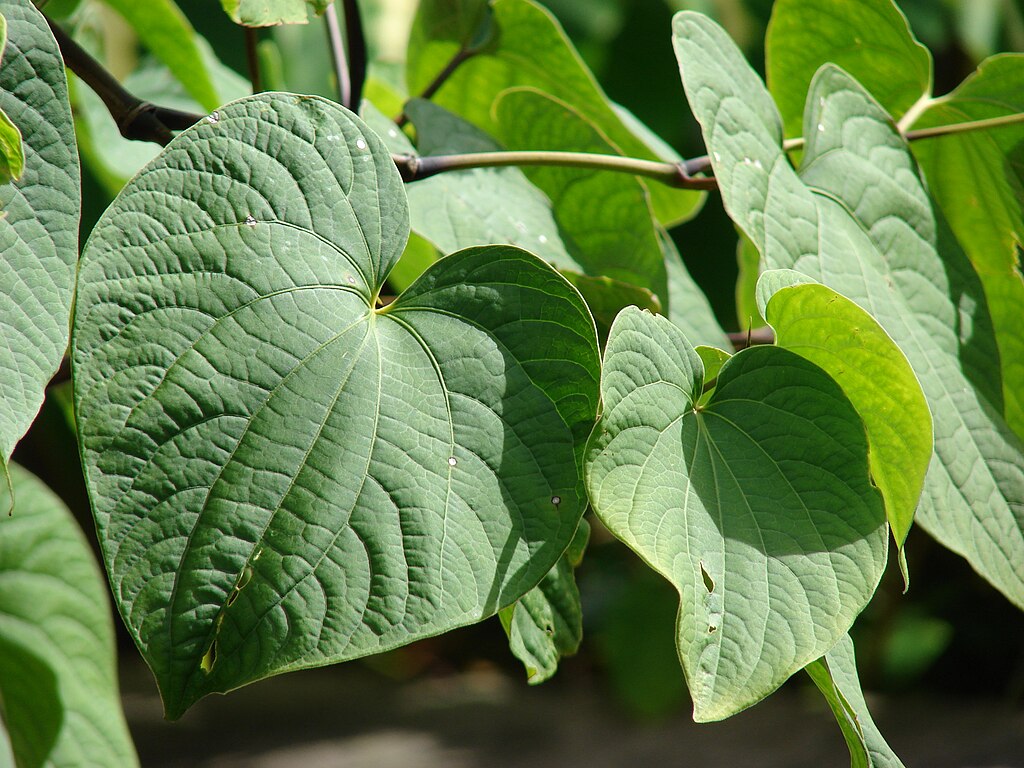
A perennial shrub in the pepper family (Piperaceae), native to the western Pacific islands — primarily Vanuatu, Fiji, Samoa, Tonga, and Hawaii. The macerated roots produce a non-alcoholic beverage with mild sedative-anxiolytic effects, central to traditional ceremonial life across much of Melanesia and Polynesia for at least 3,000 years. The active compounds (kavalactones) bind GABA receptors, producing a calming, sociable, slightly numbing experience that has made kava a cultural foundation in producing islands — and an increasingly popular bar-and-cafe substance in Western countries during the 2010s–2020s.
Scientific
Piper methysticum (family Piperaceae — same family as black-pepper) is a sterile cultigen — modern kava is propagated only by cuttings, as the plant rarely sets viable seed. The species is believed to have been domesticated from the wild Piper wichmannii by Indigenous Pacific peoples ~3,000 years ago.
The active compounds are kavalactones — about 18 known compounds, of which roughly 6 (kavain, methysticin, yangonin, desmethoxyyangonin, dihydrokavain, dihydromethysticin) account for most pharmacological activity. The compounds bind GABA-A receptors and produce a anxiolytic-sedative effect that’s mechanistically related to benzodiazepines but pharmacologically distinct.
Effects are dose-dependent: mild doses produce relaxation, sociability, and slight oral numbing; larger doses produce drowsiness, slowed cognition, and physical sedation. Kava does not produce alcohol-like intoxication or impair coordination at moderate doses; it is sometimes described as “the opposite of alcohol” — slowing the mind while keeping it lucid.
Cultural
Pacific Islander ceremonial use is foundational. Across Vanuatu, Fiji, Samoa, Tonga, the Solomon Islands, and Hawaii (‘awa), kava preparation and consumption is woven into:
- Diplomatic ceremony (the formal Fijian yaqona ceremony for visiting chiefs, dignitaries, and foreign guests)
- Religious ritual
- Daily evening community gatherings (the nakamal / kava bar of Vanuatu)
- Conflict resolution
- Welcome ceremonies
The traditional preparation involves grinding or chewing the root, mixing with water, straining through fiber cloth, and serving the resulting muddy-brown liquid in coconut-shell cups.
Modern Western diffusion
Kava bars have proliferated across US cities in the 2010s–2020s, particularly in California, Florida, Hawaii, and college towns. The substance is legal in most Western countries; recommendations and caveats vary.
A 2001–2002 series of European hepatotoxicity case reports led to temporary kava bans in Germany, Switzerland, France, and the UK. Subsequent research suggested that the problematic cases were associated with non-traditional preparation methods using ethanol or acetone extraction (which extracted toxic non-kavalactone compounds along with the active kavalactones); traditional water-extraction does not appear to have the same liver risk. Most European bans have been partially or fully lifted.
Global production
Top producers: Vanuatu, Fiji, Samoa, Tonga, Hawaii, Federated States of Micronesia.
See also
Auto-generated from this entry’s typed relations: frontmatter, grouped by relation type so the editorial signal isn’t flattened.
- Member of: plants
- Cousin of: black-pepper
Sources
- Wikipedia — Kava
A plant entry in the 0mn1.one directory.
What links here, and how
Inbound connections from across the wiki, grouped by lens and by relationship. These appear automatically — every entity page declares what it links to, and that data populates here on the targets.
Cultural
shares approach with
- Khat Social-substance kin — both are culture-defining shared psychoactive plants of their regions (qat across the Horn of Africa and Yemen; kava across Pacific Oceania), both consumed in dedicated communal sessions.
1 inbound link · 2 outbound