Plant
Cucumber
Cucumis sativus
Also known as: Cucumis sativus
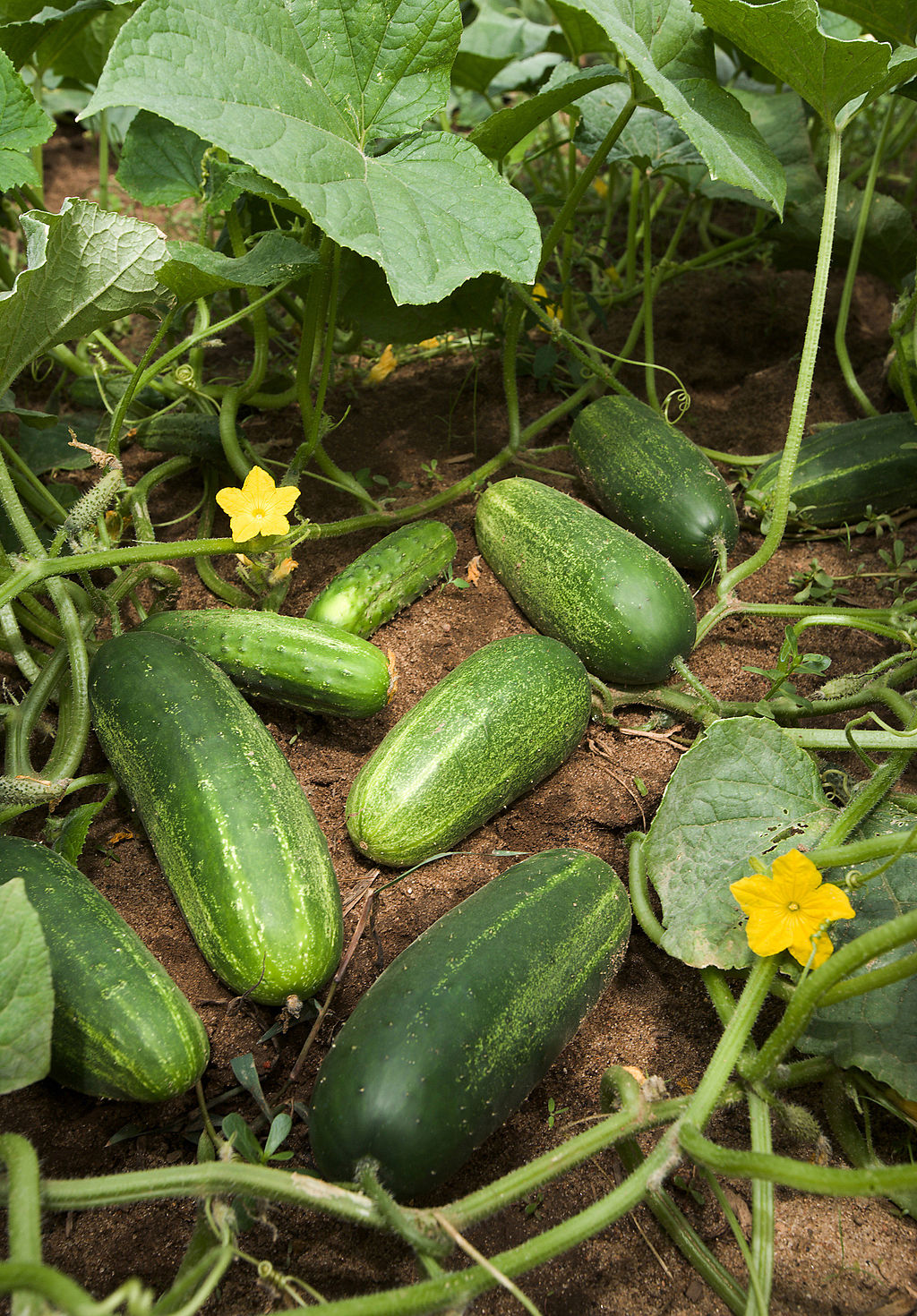
An annual climbing vine in the gourd family (Cucurbitaceae) — domesticated in northern India ~4,000 years ago. The fruit is botanically a pepo (a leathery-skinned berry, like its squash and melon cousins) but culinary-cucumber convention treats it as a vegetable. Foundational to summer salad cuisines worldwide; the substrate of every major pickling tradition from Eastern European *ogórki* to Indian *achaar* to Japanese *tsukemono*.
Scientific
Cucumis sativus is a member of the gourd family — same family as squash, pumpkin, melons, watermelons. The fruit is high water content (~95%), making the cucumber a hydration food across hot-climate cuisines.
Three principal cultivar groups: slicing (long, smooth-skinned, eaten fresh), pickling (shorter, bumpy-skinned, the basis of dill pickles), and seedless / English (long, thin-skinned, the parthenocarpic types).
Cultural and culinary
Indian origin ~4,000 years ago. Carried west through the Persian and Greco-Roman worlds — Roman emperor Tiberius reportedly ate cucumbers daily. Reached China by the 2nd century BCE, then Japan via the Korean peninsula.
The cucumber is the substrate of much of the world’s lacto-fermentation tradition outside of cabbage. Polish, Russian, Ukrainian, German, and Hungarian dill-and-garlic pickle traditions; Indian achaar (often mustard-oil based); Japanese tsukemono; Middle Eastern pickles — all are cucumber-pickling lineages.
In hot-climate cuisines (Iran, Turkey, Greece, India, Vietnam) raw cucumber appears in cooling salads and yogurt-based preparations — Persian mast-o-khiar, Greek tzatziki, Indian raita, Vietnamese gỏi dưa leo. The pattern reflects the vegetable’s cooling, hydrating role in summer heat.
Global production
Top producers: China (~75% of global supply), Turkey, Russia, Iran, Mexico.
See also
Auto-generated from this entry’s typed relations: frontmatter, grouped by relation type so the editorial signal isn’t flattened.
Sources
- FAO Crop Statistics
- Wikipedia — Cucumber
A plant entry in the 0mn1.one directory.
What links here, and how
Inbound connections from across the wiki, grouped by lens and by relationship. These appear automatically — every entity page declares what it links to, and that data populates here on the targets.
Scientific
shares approach with
- Squash both Cucurbitaceae; cucumber, squash, melon, watermelon, and gourds all share the family
Cultural
shares approach with
- Watermelon auto-linked from body mention
2 inbound links · 7 outbound