Plant
American pawpaw
Asimina triloba
Also known as: Asimina triloba, pawpaw
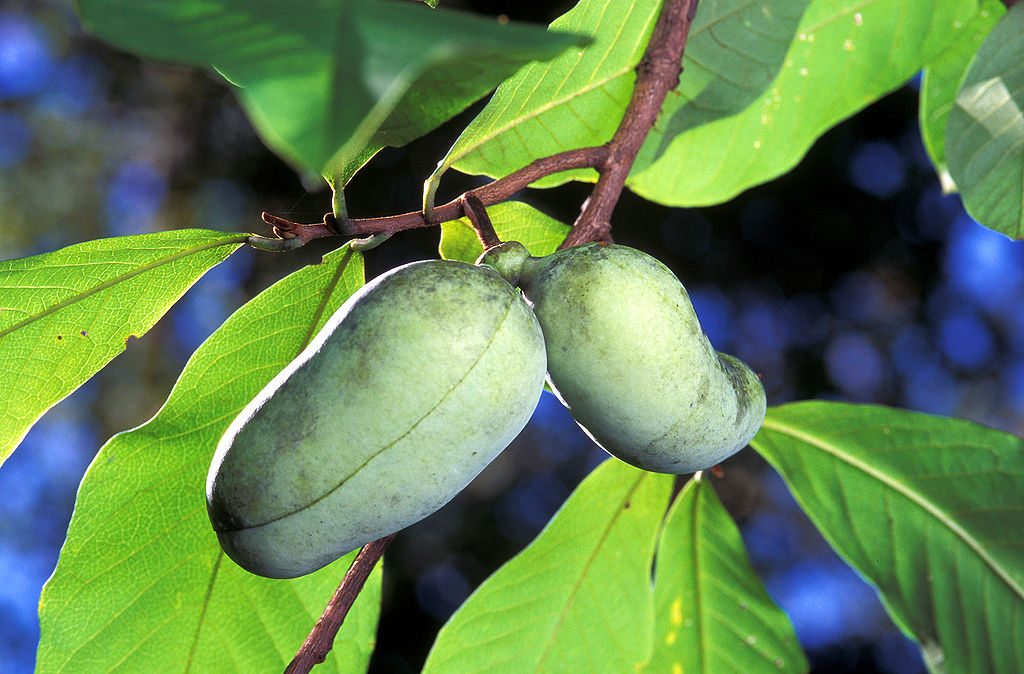
A small deciduous tree in the custard-apple family (Annonaceae), native to the eastern North American forest — the only temperate-zone member of an otherwise tropical family. The fruit is the largest tree fruit native to North America, with a custardy yellow flesh that tastes like a blend of banana, mango, and pineapple. Long-foraged by Indigenous Americans; central to the Cherokee, Iroquois, and broader Eastern Woodland foodways. The species nearly disappeared from American consciousness during the 20th-century industrialization of agriculture (the fruit doesn't ship well) but is now experiencing a deliberate culinary revival across the eastern US.
Scientific
Asimina triloba (family Annonaceae — same family as cacao‘s close relatives, soursop, cherimoya, and the global custard-apple genera). The pawpaw is the only temperate-zone member of an otherwise tropical family — a phylogenetic outlier with intercontinental implications. Asimina is essentially a North American genus extending the Annonaceae far north of the family’s tropical core.
The fruit is the largest edible fruit native to North America — typical mature pawpaws are ~10–15 cm long and 200–400 g, with custardy yellow flesh containing several large black inedible seeds.
The fruit’s poor shipping characteristics (it bruises easily and ripens unevenly) are the main reason the species missed the 20th-century commercial fruit industry. Pawpaws cannot survive the supermarket distribution chain that brought banana and mango to global markets.
Cultural and historical
Indigenous American use is documented and continuous. The fruit was foundational to the Cherokee, Iroquois, Powhatan, and other Eastern Woodland peoples; pawpaw was a major late-summer/autumn calorie source across the species’ range.
George Washington recorded pawpaw cultivation at Mount Vernon; Thomas Jefferson sent pawpaw seeds to Europe; the Lewis and Clark expedition relied on pawpaws when other supplies ran short. The phrase “way down yonder in the pawpaw patch” of the American folk song tradition references the species explicitly.
The 20th-century decline of pawpaw consciousness was nearly total — by the 1980s, most Americans had never heard of the fruit despite it being native to their continent’s forests. The 1990s–2020s pawpaw revival, led by Kentucky State University’s pawpaw breeding program, foragers, restaurants, and seasonal pawpaw festivals (Ohio’s Albany Pawpaw Festival being the largest), has restored the species to some prominence in American regional foodways.
Wildlife
The pawpaw is also notable as the obligate host plant for the zebra swallowtail butterfly (Eurytides marcellus) — the butterfly’s caterpillars eat only pawpaw leaves. Loss of pawpaw populations correlates with loss of zebra swallowtails in degraded landscapes.
See also
Auto-generated from this entry’s typed relations: frontmatter, grouped by relation type so the editorial signal isn’t flattened.
Sources
- Wikipedia — Asimina triloba
- Andrew Moore, Pawpaw: In Search of America’s Forgotten Fruit (2015)
A plant entry in the 0mn1.one directory.
What links here, and how
Inbound connections from across the wiki, grouped by lens and by relationship. These appear automatically — every entity page declares what it links to, and that data populates here on the targets.
Nothing yet. This entry is currently one node away from the rest of the graph — links will appear here automatically as the wiki grows. Each new entity that mentions this one in its relations frontmatter shows up here.
0 inbound links · 6 outbound