Plant
African violet
Streptocarpus sect. Saintpaulia
Also known as: Saintpaulia, Streptocarpus sect. Saintpaulia
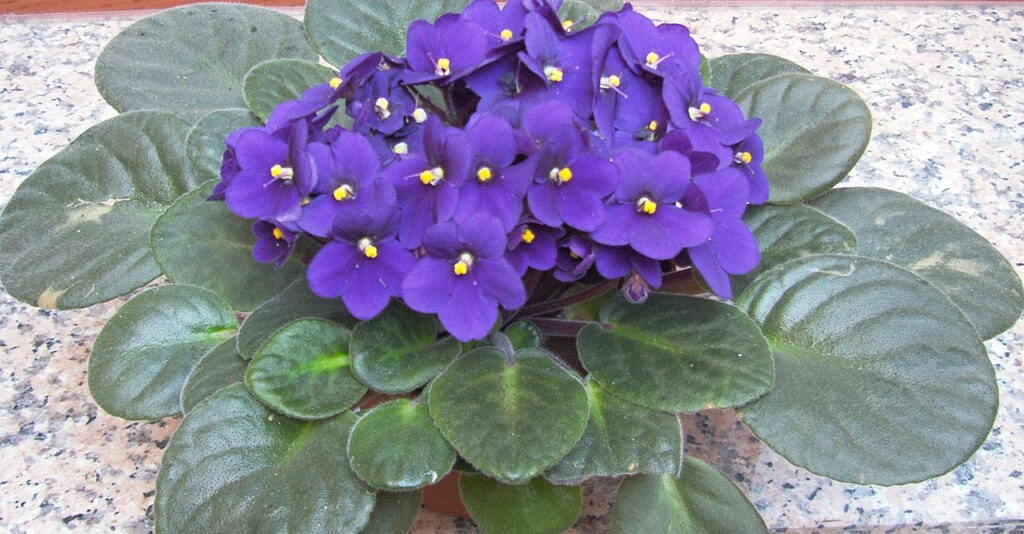
A small perennial flowering plant in the family Gesneriaceae, native to a narrow range of cloud-forest in the Eastern Arc Mountains of Tanzania and Kenya. Not actually a violet (despite the common name) — the resemblance is purely visual. Among the most-cultivated houseplants in the world, valued for its compact size and consistent flowering even in modest indoor light. Until 2015 the species was classified in its own genus *Saintpaulia*; molecular evidence reorganized it into *Streptocarpus*. The species is endangered in the wild despite tens of millions of cultivated plants worldwide — habitat destruction in the Tanzanian highlands has reduced wild populations to remnant patches.
Scientific
The African violet was historically classified in its own genus Saintpaulia (named for Walter von Saint Paul-Illaire, the German colonial administrator who first sent the species to European botanists in 1892). Molecular phylogenetic work in the 2010s showed that Saintpaulia was nested within the larger genus Streptocarpus, making the historical genus paraphyletic. As of 2015, the species are formally classified as Streptocarpus sect. Saintpaulia — though the older Saintpaulia genus name remains in widespread informal use.
The wild range is extraordinarily restricted — a few cloud-forest sites in the Eastern Arc Mountains of Tanzania and Kenya. Habitat destruction has reduced wild populations to threatened or critically endangered status across most of the wild range. The species’ commercial ubiquity (tens of millions of plants in cultivation worldwide) coexists with severe wild-population decline — a stark example of how horticultural success doesn’t translate to conservation success.
Modern cultivars (thousands of named varieties) descend from a handful of original 1890s collections. Color range spans white, pink, red, purple, blue, multi-color, and double-flowered forms.
Cultural
African violet has been a fixture of American mid-20th-century houseplant culture. The species’ specific advantages drove its popularity:
- Compact size — fits on windowsills, small tables
- Consistent flowering — blooms throughout the year given basic care
- Hardy enough for casual gardeners — survives most beginner mistakes
- Easy propagation — leaves can be rooted to produce new plants
Specialized African Violet Society competitions (active from the 1940s through today) drove cultivar diversification. The American African Violet Society of America was founded in 1946 and remains active.
The “African violet ladies” of mid-20th-century American culture — usually older women maintaining elaborate collections of African violets under fluorescent grow-lights in basements and spare rooms — became a recognizable cultural type. The 2010s–2020s plant revival has somewhat de-stigmatized the association.
See also
Auto-generated from this entry’s typed relations: frontmatter, grouped by relation type so the editorial signal isn’t flattened.
- Shares approach with: spider-plant · snake-plant · pothos · philodendron · peace-lily · monstera
- Member of: plants
Sources
- Wikipedia — Saintpaulia
What links here, and how
Inbound connections from across the wiki, grouped by lens and by relationship. These appear automatically — every entity page declares what it links to, and that data populates here on the targets.
Nothing yet. This entry is currently one node away from the rest of the graph — links will appear here automatically as the wiki grows. Each new entity that mentions this one in its relations frontmatter shows up here.
0 inbound links · 7 outbound